


What a Ten-Day-Old Price File Costs a Distributor
In September, around six in ten manufacturers reported paying more for materials than they had the previous month, according to the Institute for Supply Management. In August, fewer than half reported an increase. If your supplier raises its prices, you’ll probably need to update your selling prices too.
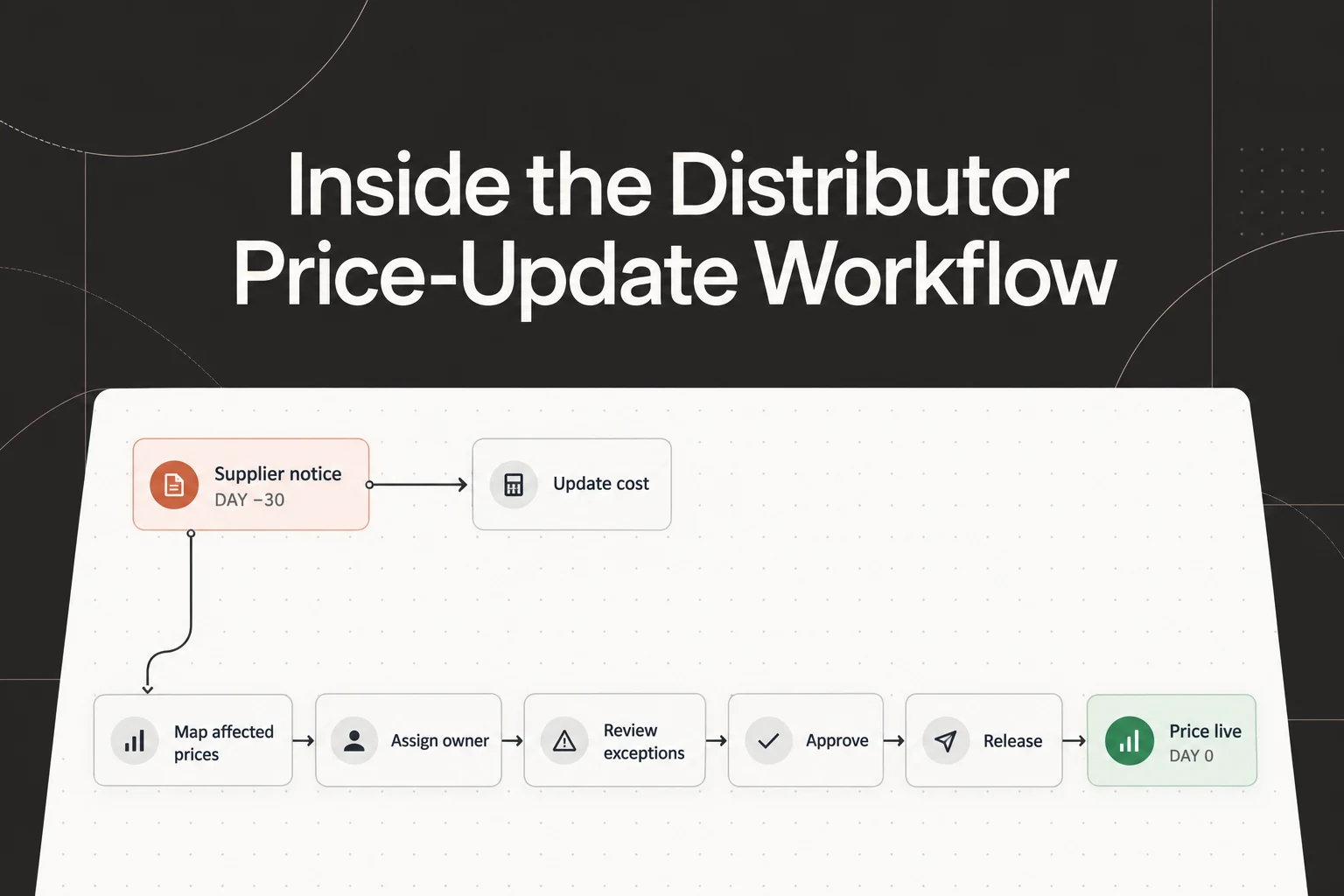
Even with 30 days’ notice, that update is more than a file change. One notice can affect thousands of customer prices that need to be mapped, reviewed, approved, and released. Frequently quoted items tend to get updated first, while less popular products can stay at their old selling prices after their costs rise.
This leads to two simple questions: how much could a ten-day delay cost, and how can you get the new prices live on time?
How the Loss Adds Up
Let’s say you buy a bearing for $40 and sell it for $50. If the supplier raises its price to $42, you earn $2 less in gross profit on each bearing sold until your new selling price goes live. A single notice can affect hundreds or thousands of products, so even a small loss on each sale adds up.
If three suppliers raise their prices by 5% in the same week and you normally spend a combined $45,000 for each selling weekday on their products, your costs rise by $2,250 a day at the same volume. If selling prices stay unchanged for 10 selling weekdays, that’s $22,500 less in gross profit. Four comparable increases with the same delay and volume over a year would cost $90,000.
Where Ten Days Actually Go
While your first thought might place the blame on slow systems, that might actually be one of the faster parts of the cycle. The issue actually comes from ownership. When a supplier’s prices go up, the selling-price changes can span thousands of SKU and customer combinations, contract terms, sales exceptions, approvals, and multiple systems.
In the earlier example, the three suppliers might give you 30 days’ notice of their price increases. You can load the new costs quickly, but updating thousands of product lines and customer-specific prices can take much longer when no one owns the selling-price changes.
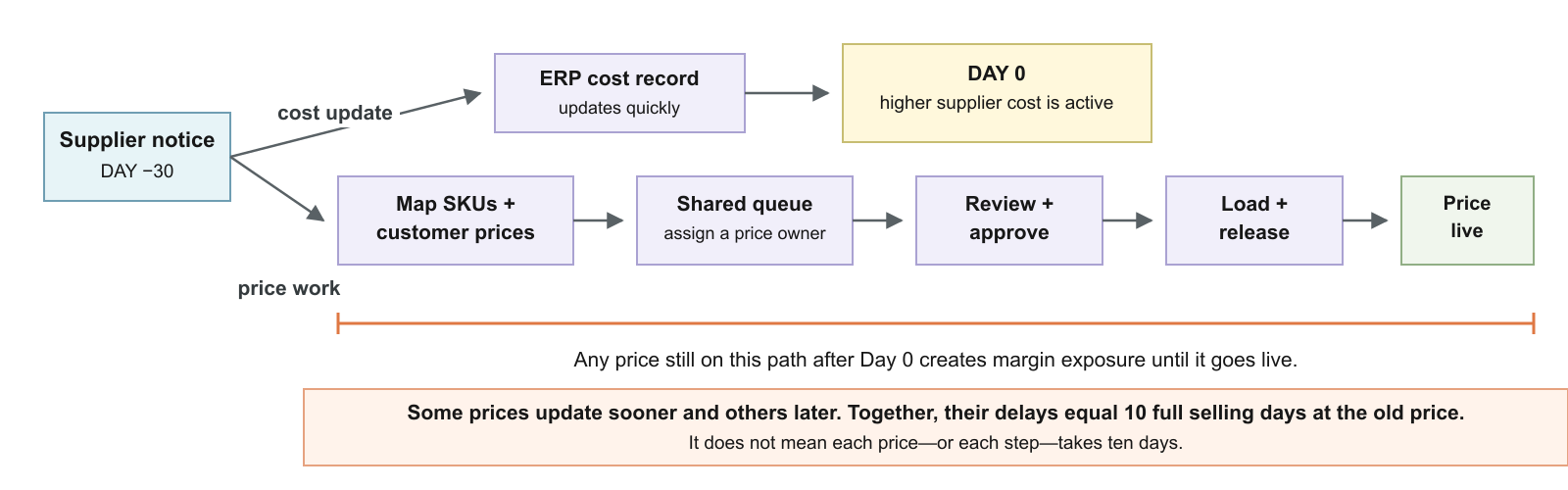
High-volume products are adjusted first because they’re easy to catch. Lower-volume SKUs and exception-priced accounts take more time, though, and aren’t anyone’s priority. While some changes might happen before Day 0, others can go live up to 10 days later.
Own Day 0
A 30-day notice only helps if someone owns the price update. They don’t have to make every change themselves, but they do need to make sure someone identifies the affected products and customer prices, reviews contracts and exceptions, gets the necessary approvals, and puts the new prices live before the supplier’s increase takes effect.
A progress report for each notice can show which prices are affected, who owns the update, and whether any exceptions, approvals, or release dates are still outstanding. This allows for accountability, but also allows an owner to reassign mapping, escalate approvals, or stage releases while there is still time. It can also be used to track when old quotes are going to expire and support shorter quote-validity periods when costs are changing quickly.
The fix is not more notice. It is a single accountable workflow with enough capacity and a clear Day 0 readiness check.
Let Haladir Step In
Haladir matches supplier notices to your systems and tracks affected prices until they go live. Send us your recent notices, and we’ll work through the potential cost of a delay with you.